
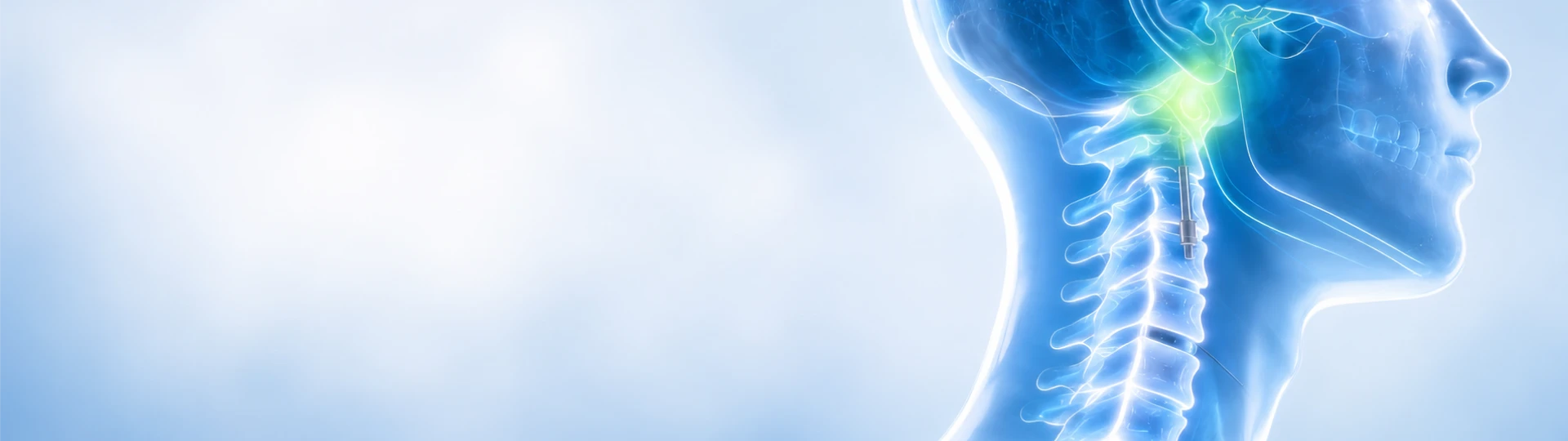
Craniovertebral Junction Surgery
The craniovertebral junction is the region where the base of the skull connects with the upper cervical spine. This area plays a crucial role in supporting the head, allowing neck movement, and protecting vital neurological structures such as the brainstem and upper spinal cord.
Because of its complex anatomy and the critical structures located in this region, disorders affecting the craniovertebral junction require careful diagnosis and specialized treatment.
Conditions affecting the craniovertebral junction may include:
- Congenital abnormalities of the skull or upper spine
- Instability between the skull and cervical vertebrae
- Compression of the spinal cord or brainstem
- Trauma or injury to the upper spine
- Degenerative changes affecting the upper cervical joints
Symptoms may include:
- Persistent neck pain
- Headaches at the base of the skull
- Weakness in the arms or legs
- Difficulty with balance or coordination
- Numbness or tingling in the limbs
Diagnosis typically involves advanced imaging studies such as MRI and CT scans to evaluate the alignment of the skull and cervical spine as well as the condition of the spinal cord.
Treatment options depend on the condition and may include:
- Careful monitoring in mild cases
- Medication to manage symptoms
- Surgical stabilization when instability is present
- Decompression procedures to relieve pressure on the spinal cord or brainstem
Craniovertebral junction surgery focuses on restoring stability and protecting neurological structures while maintaining as much normal movement as possible.