
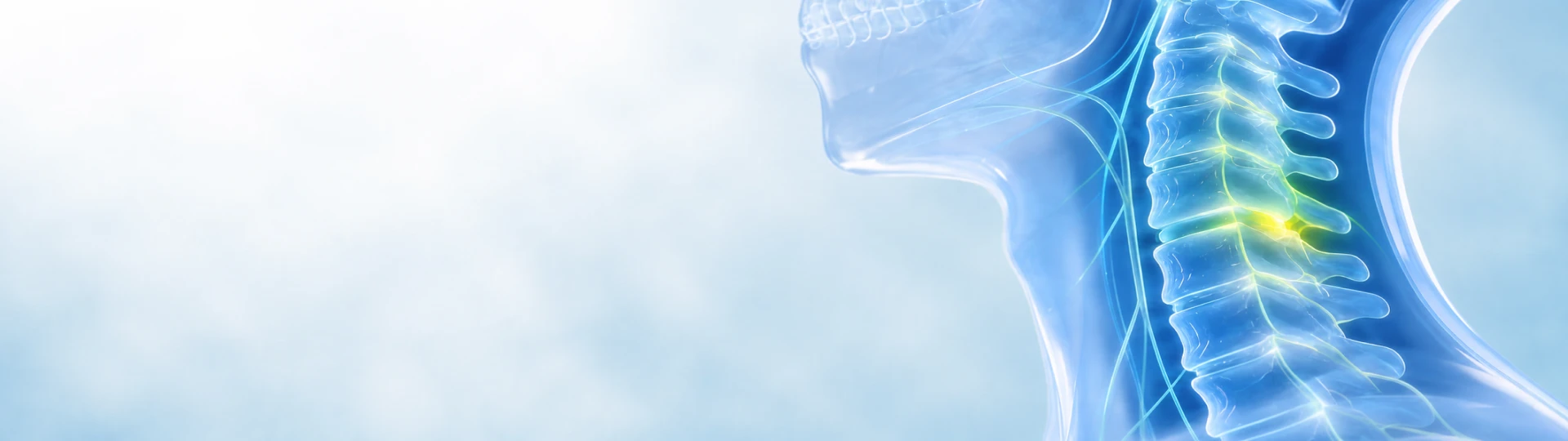
Cervical Spine Treatment
The cervical spine consists of seven vertebrae located in the neck. This part of the spine supports the head and allows a wide range of movements including bending, turning, and tilting.
Because of its mobility and the nerves that pass through it, the cervical spine is susceptible to several conditions that can cause pain or neurological symptoms.
Common cervical spine conditions include:
- Cervical spondylosis (age-related wear and tear)
- Cervical disc herniation
- Cervical radiculopathy (nerve compression)
- Cervical myelopathy (spinal cord compression)
Symptoms may include:
- Neck pain or stiffness
- Pain radiating to the shoulders or arms
- Numbness or tingling in the hands
- Weakness in the arms
- Difficulty with balance or coordination
Treatment depends on the severity of symptoms and the underlying cause.
Non-surgical treatment may include:
- Medication to control pain and inflammation
- Physiotherapy to improve mobility
- Posture correction
- Ergonomic adjustments
When significant nerve or spinal cord compression is present, surgical treatment may be necessary to relieve pressure and prevent further neurological damage.